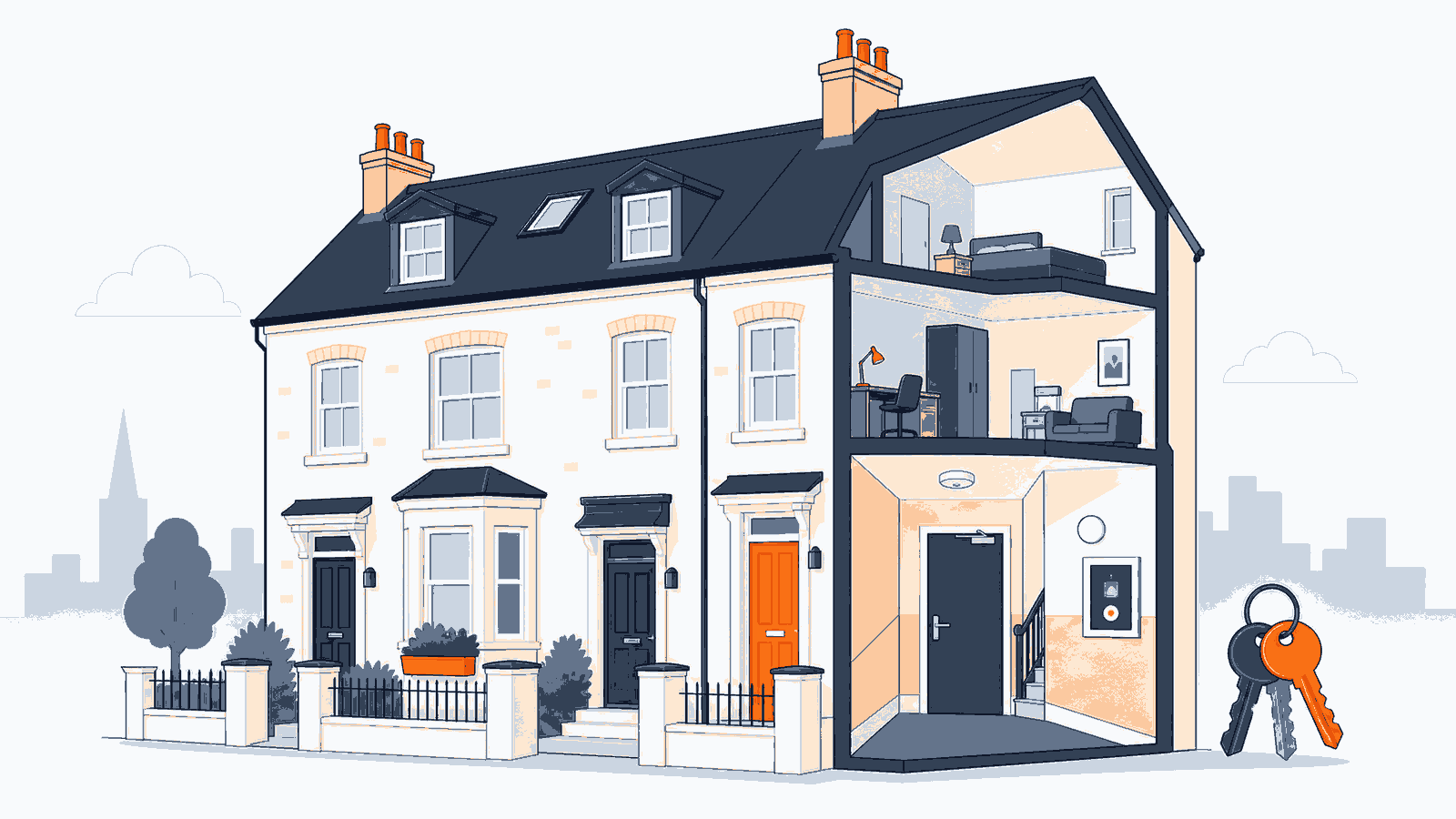
If you let property, fire safety is one of the duties you cannot delegate away by simply hiring a managing agent or an installer. As a landlord you are very often the responsible person in law, and that means making sure a suitable and sufficient fire risk assessment is in place and kept up to date. This guide explains when you need one, what it covers, how it relates to HMO licensing, and what to do when the assessment identifies work that needs doing.
It is written for landlords and HMO operators in Essex and Greater London. It does not replace legal advice, but it will tell you what good practice looks like and where the common compliance gaps are.
When a landlord needs a fire risk assessment
The Regulatory Reform (Fire Safety) Order 2005 places a duty on the responsible person to carry out and maintain a fire risk assessment. For a let property, the responsible person is usually the landlord, the freeholder, or the managing agent, depending on who controls the relevant part of the building.
The key distinction is between the dwelling itself and any shared or communal space:
- A single property let to one household (one family or one group on a single tenancy) sits outside the Fire Safety Order for the interior of the home itself. Even so, you still have separate duties, for example to provide working smoke alarms, and many landlord insurance policies expect a fire risk assessment in any case.
- Any building with communal areas, such as a shared hallway, staircase or entrance serving more than one dwelling, is firmly within scope. The communal areas must be assessed.
- Houses in multiple occupation have the clearest and strictest obligations, covered below.
If you are not sure which category your property falls into, treat the presence of any shared space as the trigger. As soon as two households share a route in or out of the building, an assessment of those shared parts is expected.
Houses in multiple occupation: the strictest obligations
A house in multiple occupation, or HMO, is a property rented to three or more tenants who form more than one household and share facilities such as a kitchen or bathroom. Larger HMOs, generally those with five or more occupants, usually require a mandatory licence from the local authority.
For HMOs, a fire risk assessment is not optional. Local authority licensing teams will expect to see one, and the assessment commonly drives specific conditions on your licence, including the grade and category of fire alarm system, the protection of escape routes, and the standard of fire doors. The Housing Act 2004 sits alongside the Fire Safety Order here, and councils use it to enforce fire safety standards in rented housing.
The fire risk assessment and the fire alarm system are related but separate things. The assessment decides what level of detection the building needs; the alarm system then has to be installed and maintained to that level. We cover the alarm side in detail in our guide to fire alarm requirements for HMO landlords and the difference between the relevant standards in BS 5839-1 and BS 5839-6 explained.
What changed for landlords since 2023
Several reforms since the Grenfell Tower fire have tightened the duties on landlords and building owners. The most important for everyday landlords are:
- Section 156 of the Building Safety Act 2022, effective 1 October 2023, removed the old threshold that only required a written assessment where there were five or more employees. The assessment must now be recorded in full, whatever the size of the operation. For a single-property landlord with a communal area, that means the assessment has to be written down and kept.
- The Fire Safety (England) Regulations 2022, in force since 23 January 2023, added duties for multi-occupied residential buildings, with extra requirements for buildings over 11 metres and over 18 metres in height, including checks on communal and flat entrance fire doors. We explain these in full in our guide to fire safety law for blocks of flats.
- The Fire Safety Act 2021 confirmed that the structure, external walls and individual flat entrance doors of multi-occupied residential buildings fall within the scope of the assessment.
The practical effect is that more landlords need a written assessment, and the assessment has to cover more of the building than many older documents did. If your assessment predates these changes, it is likely to be out of date.
What a landlord fire risk assessment covers
A competent assessment of a let building looks at far more than the smoke alarms. Expect it to consider:
- Sources of ignition and fuel: electrical installations and consumer units, heating, cooking, and stored materials in communal areas.
- Means of escape: the route from each dwelling to a place of safety, including the width and protection of stairs and corridors, exit doors, and the removal of obstructions.
- Fire detection and alarm provision, judged against the relevant British Standard for the building.
- Emergency lighting on escape routes where natural light cannot be relied on.
- Fire doors and compartmentation: the doors and walls that hold a fire back long enough for people to get out.
- Signage, records, and the management of fire safety, including who is responsible and how often the assessment is reviewed.
The output is a written report listing the hazards found, the people at risk, and a prioritised action plan. The action plan is the part that matters most, because it tells you what to fix and in what order.
How often to review it
There is no single fixed interval in law, but the assessment must be kept up to date. Good practice is to review it at least annually, and to review it sooner whenever something changes: a new tenant profile, a change of use, building work, a near miss, or a change in the law. A document written three years ago that has never been revisited will not stand up to scrutiny from a licensing officer or an insurer.
What to do when the assessment finds actions
Most assessments identify at least some remedial work. This is normal and is the point of the exercise. The risk for landlords is treating the report as the finish line rather than the start of the work.
This is where dealing with a single provider helps. J&L Security arranges the assessment through a fire risk assessor we work with who holds AIFSM, TMIFPO and NEBOSH, and then carries out the remedial work directly: fire alarm installation and upgrades to the relevant BS 5839 standard (we are BAFE-accredited for fire alarm installation and maintenance), emergency lighting, electrical testing, and fire door works. You get one point of contact from the assessment through to a building that meets its action plan, rather than a report that leaves you chasing separate trades. You can see the full service on our fire risk assessments page and our fire alarms page.
We work across Essex and Greater London, with local teams covering Brentwood, Romford, Chelmsford, Basildon and the surrounding areas.
A short checklist for landlords
- Identify whether your property has any communal area, which brings it into scope.
- Make sure a written fire risk assessment exists and is dated within the last year.
- Check it reflects the post-2023 changes, including Section 156.
- For HMOs, check the assessment against your licence conditions, especially the alarm grade and category.
- Action the report: complete the remedial works and keep the certificates.
- Diarise the next review.
If you would like an assessment arranged and any resulting work carried out by one team, call J&L Security on 0204 538 5925 or 0208 220 4770, or request a call back.